Essential Septic System Maintenance Tips for Homeowners: Protect Your Investment with Professional Care
As a homeowner, it’s important to understand the different systems that manage wastewater in your home. Two common methods are septic systems and public sewers. If your home relies on a septic system, you’ll need to take specific steps to ensure it remains in good working order. Proper maintenance is crucial not only for your home’s value but also for your health and the environment.
Septic Systems vs. Public Sewers: What’s the Difference?
Before diving into maintenance tips, it’s helpful to understand the fundamental differences between septic systems and public sewers. A public sewer system is a network of underground pipes that transport wastewater from homes to a central treatment facility. Homeowners who are connected to a public sewer system pay a monthly fee for this service.
On the other hand, a septic system is a self-contained, on-site system that treats and disposes of wastewater right on your property. This means you are responsible for maintaining the system to avoid issues like backups, odors, and potential contamination of the surrounding environment.
Why Septic System Maintenance Matters
Your septic system is a complex network that treats and disposes of wastewater from your home. Unlike a public sewer system, where maintenance is handled by the municipality, septic system maintenance falls on the homeowner. Neglecting this system can lead to costly repairs, health hazards, and environmental damage. Regular maintenance helps avoid these issues, ensuring that your septic system operates efficiently and lasts longer.
Top Septic System Maintenance Tips for Homeowners
- Regular Inspections Are Key
Routine inspections by a qualified professional can help identify potential issues before they become major problems. It’s recommended to have your septic system inspected every three to five years, depending on usage and the size of your household. - Pumping the Tank Regularly
One of the most critical maintenance tasks is having your septic tank pumped regularly. Over time, solid waste accumulates, and if not removed, it can clog the system and lead to backups. A professional can determine the appropriate pumping schedule based on your specific system and usage patterns. - Be Mindful of What Goes Down the Drain
What you flush or pour down the drain can significantly impact your septic system. Avoid flushing non-biodegradable items, such as wipes or feminine hygiene products, and be cautious with the use of chemicals that could disrupt the balance of bacteria in the tank. - Water Conservation Is Crucial
Excessive water use can overwhelm your septic system. Simple practices like fixing leaks, installing water-efficient fixtures, and spreading out laundry loads can reduce the strain on your system. - Keep the Drainfield Clear
The area around your drainfield should be free from heavy structures, trees, and plants with deep roots. These can damage the pipes or compact the soil, affecting the system’s ability to absorb wastewater.
Finding Your Septic Tank: A Step-By-Step Guide
Locating your septic tank is an essential part of maintaining the system. If you’re unsure where your septic tank is, here are some steps you can take to find it:
- Check the Records: Start by reviewing your home’s property records or septic system diagram. These documents often contain the location of the tank.
- Look for Access Ports: Septic tanks usually have access ports or lids that are visible from the surface. These are typically found in the yard near the house.
- Hire a Professional: If you’re unable to locate the tank on your own, it’s best to hire a septic service professional who can locate it using specialized equipment.
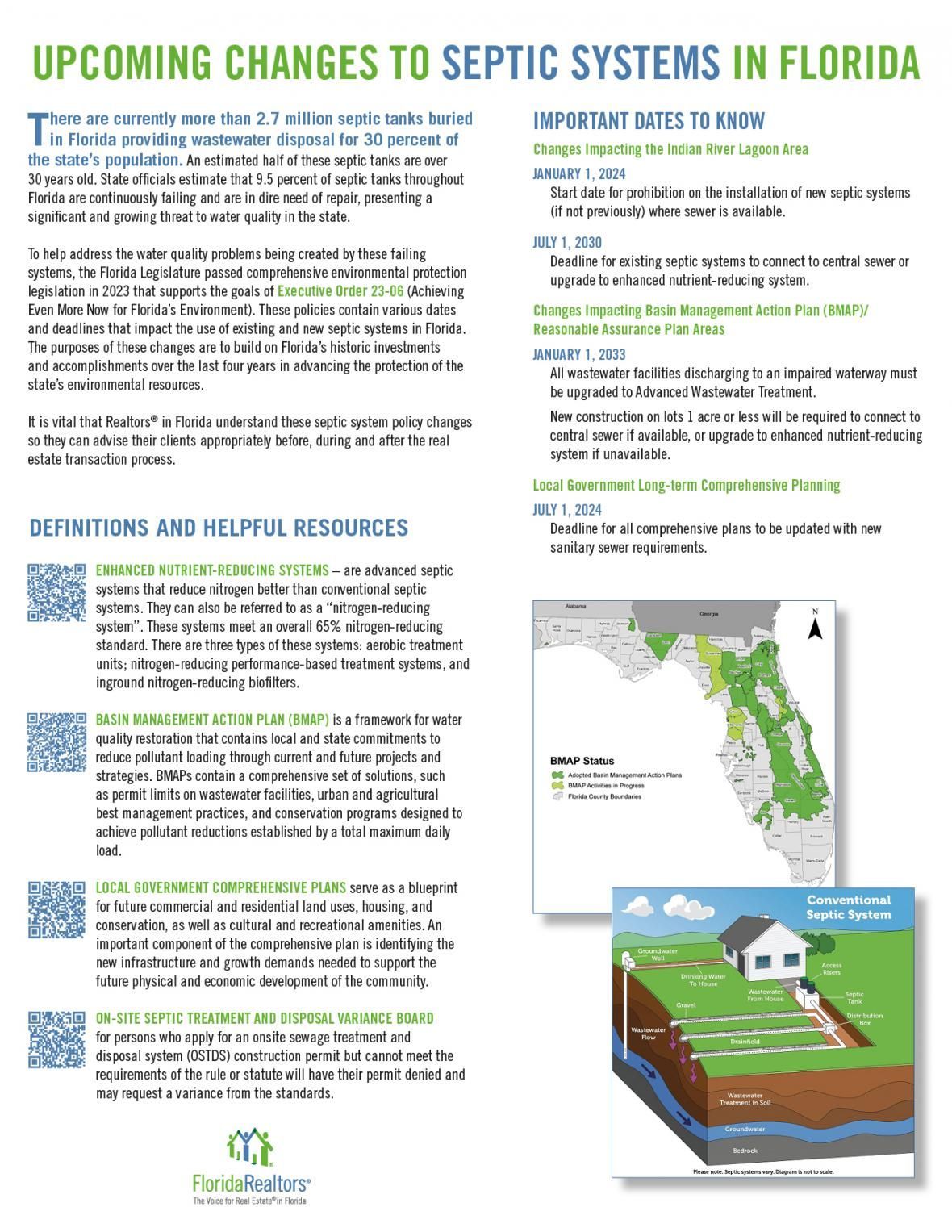
Upcoming Changes to Septic Systems in Florida
As a homeowner in Florida, it’s important to stay informed about upcoming changes to septic system regulations that could impact you. The Florida Department of Environmental Protection (DEP) is implementing new rules aimed at improving water quality and reducing pollution from septic systems. These changes may include stricter inspection requirements, new standards for nitrogen-reducing technology, and potential financial assistance programs for homeowners needing to upgrade their systems.
These regulatory updates underscore the importance of regular maintenance and working with professionals who are knowledgeable about the latest requirements. Staying ahead of these changes can help you avoid penalties and ensure your septic system remains compliant with state laws. (Please see Infographic below.)
Why Hiring Qualified Professionals Is Non-Negotiable
While some aspects of septic system maintenance can be handled by the homeowner, certain tasks should always be left to the experts. Professionals have the necessary tools, experience, and knowledge to handle inspections, pumping, and repairs safely and efficiently. Moreover, they stay up to date on important changes and laws regarding septic systems, including new regulations and technological advancements. This ensures that your system remains compliant with the latest requirements, helping you avoid costly penalties and ensuring your septic system operates at its best. Regular professional service can help you avoid emergencies and maintain the value and safety of your home.
As a real estate agent, I understand the importance of maintaining every aspect of your home, especially systems that aren’t always visible. A well-maintained septic system not only protects your investment but also ensures a healthy living environment for you and your family. By following these tips and working with qualified professionals, you can enjoy peace of mind knowing your septic system is in good hands.